
This story comes to us from a book by Margery Williams, which bears the alternate title “How Toys Become Real.” It is interesting to think about how many stories there are out there that concern toys becoming real. It seems that as long as children have played with toys, they have fantasized about their being really alive. From Colloddi’s Pinocchio to Milne’s Winnie the Pooh all the way through to Bill Watterson’s comic strip Calvin and Hobbes and the phenomenally successful Toy Story films of Pixar. Only a few months ago, I shared a story of live toys (and a certain penguin of which I know of) with you all. What sets this story apart from so many of these others is that, in this story, the titular rabbit is destined to become real not merely a living toy.
Velveteen, before you ask, is a kind of fabric usually made from cotton which is designed to look and feel somewhat like velvet. It was this material that a toymaker once used to make a lovely little rabbit which was bought by a nice lady and subsequently given to her son as a Christmas gift. The boy was very happy and absolutely loved his new Velveteen Rabbit…for about two hours. By then, he had unwrapped other gifts. Clockwork trains, electric soldiers, and the very latest in video games: 8-Bit graphics and everything!
Okay, that last one’s not right, but I think you get the idea. The rabbit was just velveteen stuffed with sawdust, he didn’t make a noise or move on his own or light up or anything. So, after the Christmas festivities were over, the rabbit was tossed carelessly into the toy chest with all the other toys the boy hardly ever played with but would throw a tantrum if you even suggested giving them away.
Of course, the other toys looked down on the rabbit for being so old-fashioned. They had moving parts and wind-up keys and could move and walk and talk. Some of the fancier toys even pretended to be real.
“And look at you,” said one particularly nasty toy boat. “Have you ever even seen a real rabbit?”
“Real rabbit?” asked our velveteen friend. “What is that?”
“Sort of like you,” said a kind voice from outside the chest. “Only very, very different.” The Velveteen Rabbit looked out of the chest and saw that he was being addressed by a rocking horse, who was perhaps the oldest toy in the room and was very kind and clever. “Don’t let those fancy toys get to you,” he said with a friendly smile. “I’ve seen hundreds of toys come and go in this place. They’re top of the heap one day and the maid is picking up their gears and springs the next.”
“What is real?” asked the Rabbit.
“Not like those toys, I can tell you that. It’s difficult to explain, but when you are real you can move and think on your own. You can live and breathe and eat just like live animals do. There are no toy chests if you’re real, no little boys poking and pawing at you. It means you’re alive and that’s the best thing to be.”
The Velveteen Rabbit wasn’t sure he understood the Rocking Horse’s words, but they did excite him. He thought he’d like to try being real. “How can I be real?” he asked.
“For toys, it’s not easy. It takes love. The love of a child. And I mean a great love. You must be real in his eyes, and then you’ll be real in everyone’s eyes.”
“You’re crazy!” chimed in a toy car. “That’s just an old toys’ tale. Toys don’t become real. We’re built, we’re played with, we wear out, we’re thrown away. That’s the best any of us can hope for!”
Now the Velveteen Rabbit was very confused and he didn’t know who to believe.
The next night, the boy was throwing a fit because he had lost his china dog. This was a little toy dog that he always took to bed with him and he couldn’t sleep without it. The woman called “Nanny” didn’t know what had become of the dog but knew she had to get the boy to sleep soon. So she looked through the toy chest and there she found the Velveteen Rabbit. “Here,” she said. “Remember your bunny? I’m sure he’d like to spend the night with you.”
The boy was hesitant at first, but he gave in eventually and from then on, it was not the china dog, but the Velveteen Rabbit the boy called for when bedtime came. Of course, the fancy, wind-up, clockwork, electric, etcetera toys were shocked and appalled at the Rabbit becoming the boy’s favorite toy, but the Rocking Horse was very proud of his little friend. “You may turn real yet,” he said one night.
But in the meantime, the Rabbit was having so much fun playing with the boy that he hadn’t noticed he was changing. His pretty brown coat was getting duller and shabbier. The pink paint from his nose was almost rubbed off. A few of his seams were getting loose and stuffing began to peek out. He was beginning to wear out, just as the toy car had said he would. One day, the boy had been playing with the Rabbit out in the garden and left him there, so when bedtime came, Nanny had to go get him, clean him off (as best she could) and hand him to the boy.
“I don’t see why you make such a fuss over this toy,” she said as she handed the Rabbit over.
“He’s not a toy!” insisted the boy. “He’s real!”
Real? Thought the Rabbit to himself. Am I real? The boy said so, and the Rocking Horse did say that a child’s love could make me real. If he says I’m real…I must be! I’m real!
That summer, when he and the boy were playing as they always did, the Rabbit found himself left temporarily alone on the lawn. As he sat there, patiently waiting for the boy to return, two very strange creatures hopped over to him. The Velveteen Rabbit didn’t know what they were, but they were, in fact, rabbits. Real rabbits. They stared at the Velveteen Rabbit, who stared back at them, trying to figure out where the wind-up key was.
“Hello,” said the rabbits.
“Hello,” said the Rabbit.
“Would you like to run and play with us?”
“I can’t until my boy comes back.”
“Can’t you move on your own?”
“No. Why can you?”
“Certainly. Because we are real rabbits, whereas you are just a toy rabbit.”
The Velveteen Rabbit was taken aback. “But…but the boy said…he said I was real.”
“Well, look,” said the rabbits patiently, “this is very easy to settle. Can you jump?”
“Not unless the boy tosses me in the air.”
“Can you run?”
“Not unless the boy is holding me.”
“Can you wiggle your nose?”
“I don’t know, I’ve never tried.” He tried. “No, I can’t.”
“Then, I’m sorry, but you’re not a real rabbit like us.” And with that, the rabbits hopped away as the boy came back to play with his now crestfallen toy.
The boy went on loving the Velveteen Rabbit for quite some time. He loved him so hard that he was now quite worn out. He was more gray than brown, he had been repaired by Nanny seven or eight times, and his stuffing was so bent out of shape that he hardly even looked like a rabbit anymore, except to the eyes of the boy, and that’s all that mattered to the Rabbit. No matter what anybody else said, the boy said he was real so real he must be…but that’s when the boy got sick. Very sick.
The Velveteen Rabbit heard snatches of grown-up conversation. Words like “fever” and “scarlet” and “deathly ill.” It was decided that the boy would be taken to the sea-side for some fresh air. But on the day he left, something terrible happened: He left the Velveteen Rabbit behind. And once the boy was well out of the house, in came Nanny and a few maids, all wearing white handkerchiefs over their mouths.
“Okay, you heard the doctor. Everything must be destroyed so the virus can’t spread.” The Velveteen Rabbit, unable to move, watched as they gathered up the boy’s clothes, his bedsheets, his blankets…and his toys! “That rabbit especially,” said Nanny. “He played with that thing morning, noon and night. It must be infected.”
And so the Rabbit, along with many of the boy’s other possessions, were taken outside, far from the house and thrown onto a big pile. Some kind of smelly liquid was poured over it all and then the matches were struck and the fire set.
This is it, thought the Velveteen Rabbit. The toy car was right all along. I was made, played with, I wore out and now I must be destroyed. I shall never be the real rabbit I was when the boy held me close. And as he thought about his horrible fate, a most remarkable thing happened: A single tear, a real tear, rolled down the Rabbit’s cheek and onto the earth below. Suddenly, he couldn’t feel the heat from the flames. And all he could see was a bright, white light, that seemed to be surrounding him. A moment later, he felt that he was not on the bonfire after all, but in a warm, safe place, like when his boy used to cuddle him at night. He didn’t feel quite so shabby anymore, either…
When the next springtime came, the boy went out to play. His scarlet fever was quite gone and he carried with him a fine, new toy rabbit he had been given when he was sick. As he was playing, he saw two real rabbits, one of which looked like any old ordinary brown rabbit. The other, however, looked…familiar.
“That looks just like my old velveteen rabbit,” the boy said. “The one I lost when I got sick.”
The Rabbit smiled in his heart as he looked at the new toy rabbit being held by the boy who had helped bring him to life. But that was the last he ever saw of the boy. He went off with the other real rabbits like himself, and lived very happily ever after.
THE END
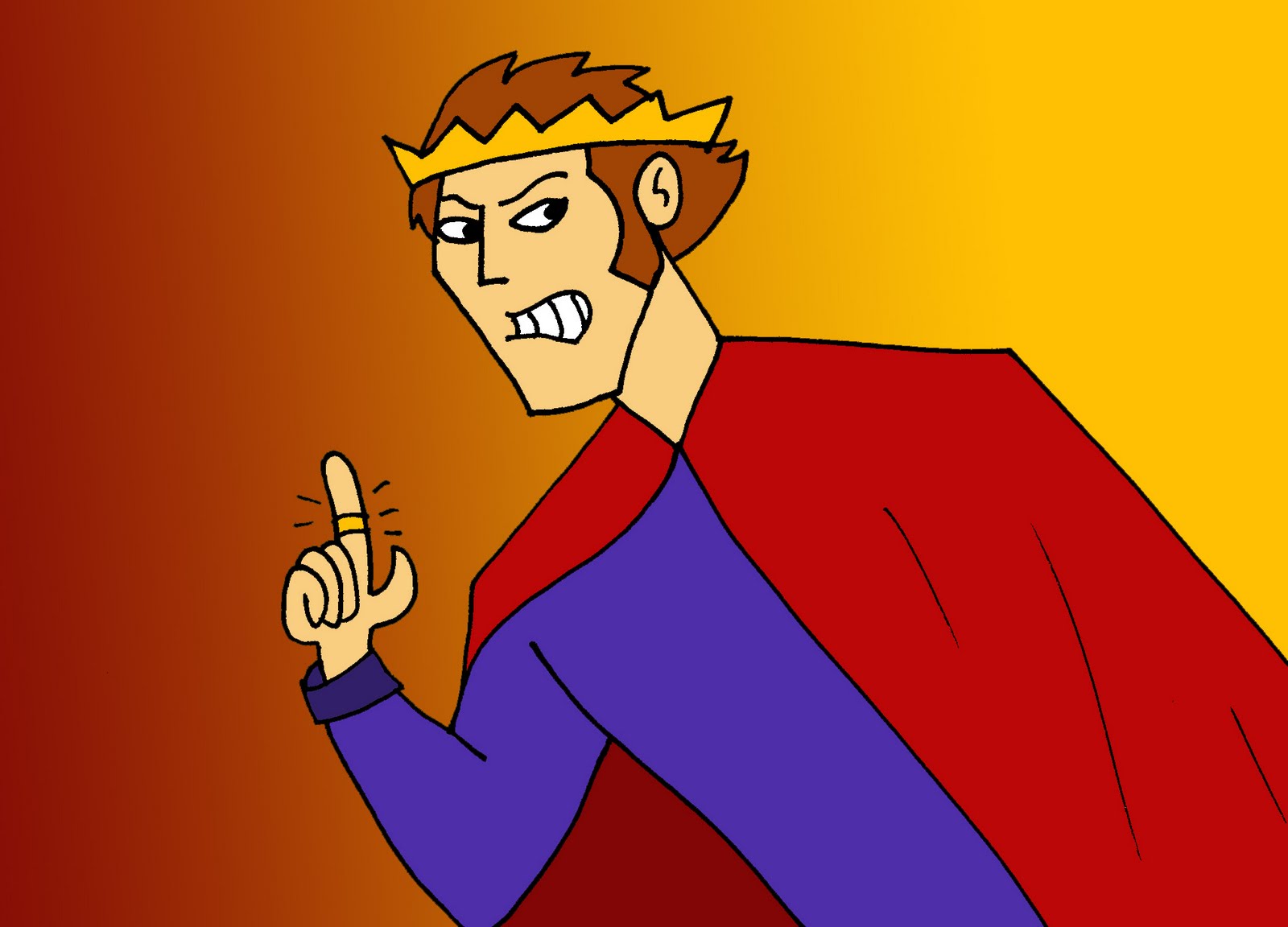
NEXT WEEK: "Prince Darling"


